

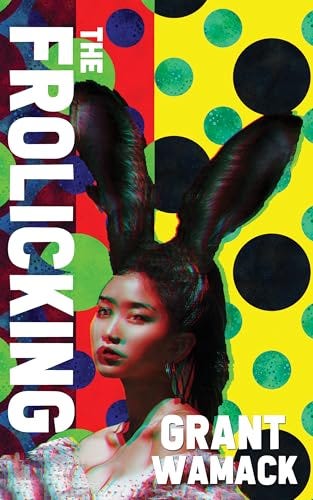
Grant Wamack is a Wonderland Award-nominated, LA-based author of contemporary horror and crime fiction. Best known for God’s Leftovers and Black Gypsies, his work is a mix of strange, surreal elements but often lives at the borderline of transgressive horror. Some of his newer titles, such as The Scarecrows Will Watch Over Us and The Frolicking, lean into folk horror. He has published more than 40 short stories in places including Dark Moon Digest, The Best of Surreal Grotesque, and The New Flesh.
***
Mac: So, I read that you started writing out of pure spite after reading an indie script. After all those years now, why do you write?
Grant: That’s true. I used to be a traditional artist growing up and while working on my comic book art portfolio, I stumbled across an indie comic script that was so bad, it motivated me to pen my own. That was the initial catalyst that sparked my passion for writing.
Nowadays, I just love it. It’s fun and I like to challenge myself with every new book to stretch myself into new creative territory. Plus, I have a surplus of ideas I want to tackle for years to come.
Mac: Do you have a way to handle a surplus of ideas? Do you note them down and prioritise them in any way?
Grant: My notes app is full of short stories ideas, book ideas, snippets of dialogue, random scenes etc. I do have a writing projects note that breaks down the current projects in progress: novels, short stories, scripts, poems, etc. This helps me stay organized and I’m able to return to it and find something new to work on every time I complete something.
Mac: You don’t seem to like labels or being confined to genres, but if someone forced you to shelve your own books in a bookstore, where would you put them?
Grant: Yeah, I tend to dance across multiple genres in my novels and short stories. Most of my novels are horror so I would say the horror section, but I feel like a cheat-code shelf would be literary fiction since that houses a ton of genres. I wish bookstores had a weird fiction shelf though, that would be home.
Mac: What’s the secret ingredient in a Grant Wamack book? Is there one? What makes it yours and not someone else’s?
Grant: The secret ingredient in a Wamack book is a combination of surrealism, authenticity, intensity, and weirdness. I think when you read my books I weave a lot of real life experiences and observations filtered through a weird/surreal lens. Also, there aren’t many writers of color in the horror space, so I bring a unique perspective and like to explore different cultural backgrounds.
Mac: Recently, we’ve had a few interesting movies represented by Jordan Peele or Ryan Coogler (Sinners). Does it feel like the field is genuinely changing, or does publishing still lag behind film?
Grant: I feel like the overall horror field is becoming more expansive with more diversity and even analog horror and other niche subgenres becoming more and more popular. However, I think the horror publishing industry is still lagging behind the film industry.
There is more opportunity for sure, but I’ve also seen a lot of people claim to champion diverse horror, but don’t actually follow through or back it up. And it’s somewhat sad to see a lack of representation at many book conventions. You’ll see a handful of Black writers, or a handful of Latinx writers, maybe one or two indigenous, etc.
I remain positive and hopeful that a shift is happening and more doors will open over time.
Mac: You’ve called Tarot your “GPS,” but what’s the strangest detour the cards ever forced into your life, your writing, or else?
Grant: That’s a good question. There are a ton of detours…it’s made me more open to trying new things. Taking a new class or doing jiu jitsu…if the cards say it’s good, then I’m willing to take a leap of faith.
I’ve had people hit me up to help find missing people (not my speciality), connect with dead relatives, help untangle many love lives, etc. It’s all pretty normal to me; the strange factor dissolved over a decade ago.
Mac: You said once that you worked on a psychic hotline. What’s the strangest thing you learned from being that voice in the dark for people grasping at hope?
Grant: I didn’t learn anything strange at that point only because I’ve heard just about everything. I would just say people want to be loved and will do anything for that to happen. A lot of people want security and reassurance in a world full of calamity, stress and low vibrations. Also, a lot of solutions are so much more simple than we make them out to be.
Mac: You’ve said writing weird fiction helps you process trauma. What does weirdness let you do that realism can’t?
Grant: I think life is weird and strange. Sometimes, I can see different perspectives through writing fiction, process a situation through characters, and it gives me more empathy for people in general. A lot of times, a villain wasn’t born that way, there was a series of events that molded and shaped them. I like to explore and examine the human condition and the inner contradictions we all harbor.
Mac: So there’s a need to sometimes empathise with a villain?
Grant: Need is a strong word, but I think it’s important to depict humans in all of their beauty and ugliness. I personally don’t like a hero or villainess that has no flaws. That just isn’t realistic.
Mac: In Black Gypsies and Bullet Tooth, violence, grief, and the supernatural live together most of the time. But can the supernatural make the real too trivial? Is there a worry that it can steal the thunder of a thing?
Grant: No, I think everything has a balance. The supernatural & violence isn’t running non-stop; I make sure there are moments of mundanity and banalness in between.
The supernatural can trivialize the real if an author isn’t conscious of this balance. It’s like cooking a dish, you want to make sure no ingredients overwhelm the tastebuds. You gotta chef your book up properly.
Mac: Your stories drip blood, but do you have a fine line between when violence is worth it and when it’s not?
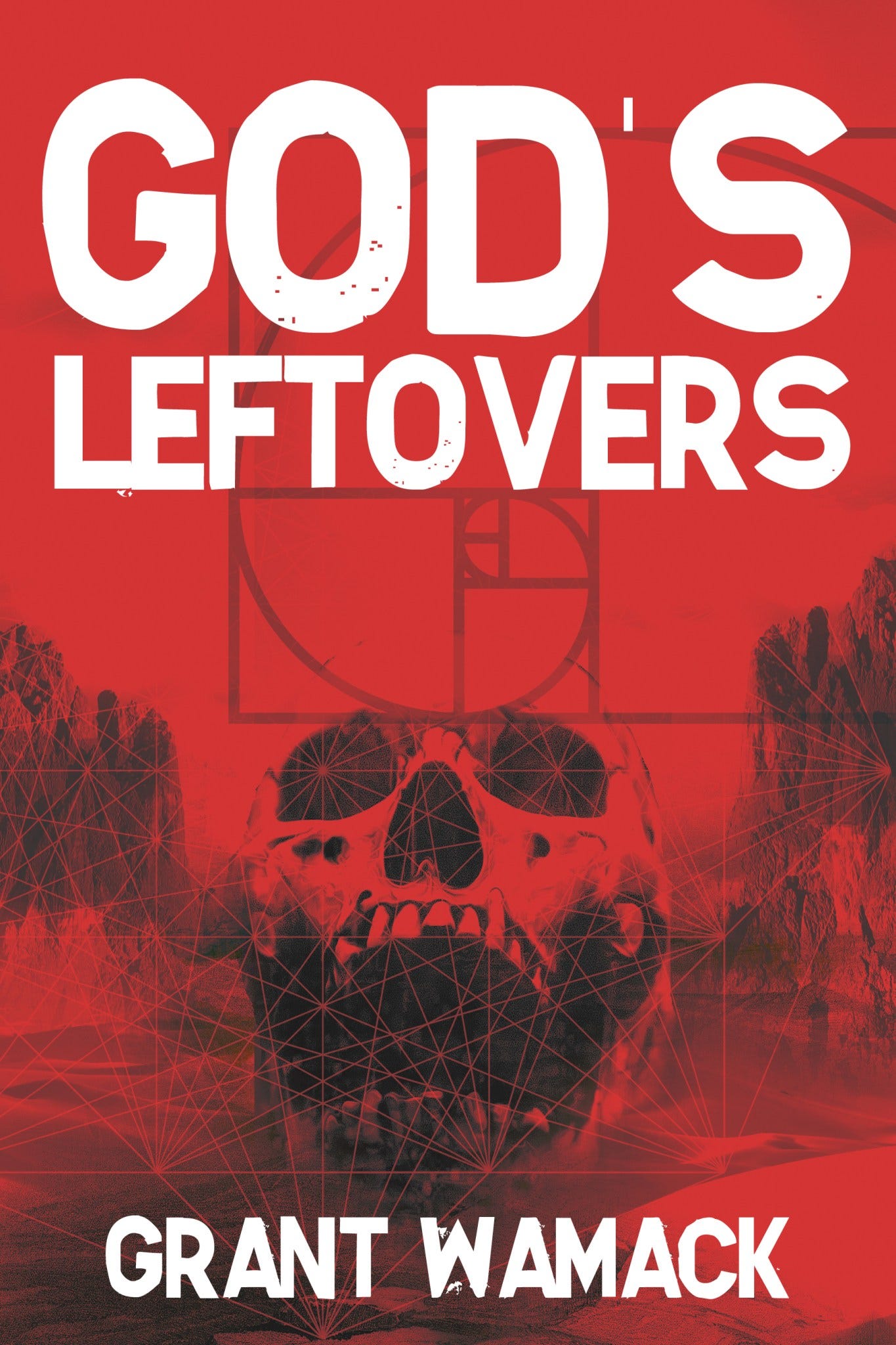
Grant: Yes, it depends on if it serves the narrative and the pre-established rules/tone. Something like God’s Leftovers is full of violence mainly because there are cannibals and such so it makes sense.
But if I have a story that is quiet and atmospheric, it doesn’t make sense to include it.
Mac: Have you ever written something that scared even you?
Grant: I would say putting vulnerable parts of myself into Black Gypsies was somewhat scary since that was the first time I moved away from bizarro and completely made up every aspect. And this was the first time I wrote a crime fiction novel, so I was nervous how the public would react to something new from me.
God’s Leftovers is similar in the sense that this was the first time I wrote an extreme horror novella. I wrote a lot of brutal scenes that even made me uncomfortable, but it turned into my most popular book. Being bold and daring with your writing tends to pay off more times than not. I have some sequel ideas for a potential series/trilogy, that might come to fruition at some point.
Mac: Give me five things: books, films, comics, anything that altered how you think about storytelling.
The Books of Blood by Clive Barker
Sandman comic book series by Neil Gaiman
The Shadow at the Bottom of the World by Thomas Ligotti
Throne of Bones by Brian McNaughton
Caught Stealing by Charlie Huston
Mac: That’s a beautiful list. Is there anything Barker or Ligotti inspired you with, or gave you?
Grant: Barker taught me that I can take things even further than I imagined. Some of his short stories moved into territory other authors wouldn’t go to. He showed me you can make gore, eroticism, and brutality beautiful and profound.
Ligotti taught me that cosmic horror is expansive and that there’s beauty in the darkest of sentiments. He also taught me how to dive deeper into crafting atmosphere with my prose.
Mac: You’ve moved through lots of genres like bizarro, folk horror, crime, cyberpunk, and more. Is there a literary territory that scares you or challenges you, and do you want to run toward it or away from it?
Grant: I’ve experimented with almost every genre in short story form so I’m pretty comfortable. I run towards challenges at this point.
Mac: Somebody stumbles into your books. Where should they start?
Grant: If you’re into crime fiction with some real heart behind it, Black Gypsies is a good place to start. It’s a short, propulsive read, but it hits like something much bigger. I wanted it to feel cinematic, almost like a Safdie Brothers film. This is probably my most mainstream and accessible book.
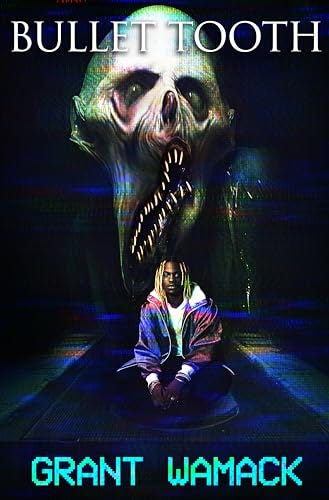
Fans of Jordan Peele and Chief Keef will love Bullet Tooth. It’s analog horror meets crime fiction meets social commentary, set in Chicago. A Black teenage artist accidentally summons an entity that feeds off violence through a VHS tape he finds in a dumpster and it goes on a rampage.
If you want to sample my range before committing to a full novel, grab The Hum of the World & Other Stories. It’s a dark short story collection and it’ll show you what I’m capable of across different styles and tones.
My most popular book is God’s Leftovers even though it’s incredibly violent and bloody. So if you want to dive into the deep end of my catalog, this is a surreal hyperviolent novella about hippie cannibals who lure in a diverse group of strangers stranded in the Valley of Fire.
You can meet Grant here on Substack:
Third Eye Horror
© Mac Sitko, 2026
All rights reserved.
I am a huge Hum of the World fan. When that book picks up popular steam there will be no stopping it. A rare short horror story collection that actually hits with every piece